Why Acoustic Friendly Furniture Matters Today
Work from home has slowly become a part of everyday life in India. What started as a temporary setup is now permanent for many people. Dining tables have turned into work desks and bedrooms double up as meeting rooms. With this shift, the need for quiet spaces inside the home has become more important than ever.
Indian homes are full of sound. Traffic noise, neighbours talking, pressure cookers, ceiling fans, children playing and televisions running in the background. These sounds may feel normal, but during work hours they break focus again and again.
Noise affects more than just concentration. Constant sound increases irritation, mental tiredness, and stress. Many people feel exhausted even after sitting at home all day. This is where furniture plays a quiet but important role.
Furniture is not just for sitting or storing things. The right furniture can absorb sound, reduce echo, and make a space feel calmer. Without changing the structure of the house, simple furniture choices can improve how sound behaves inside a home.
Understanding Sound Inside the Home
Sound moves easily through open spaces and hard surfaces. Floors made of tiles, plain walls, glass windows, and empty corners reflect sound back into the room. This creates echo and makes noise feel louder than it actually is.
When sound keeps bouncing around, the mind stays alert even when it should be relaxed. People become restless without knowing why. Small sounds start feeling disturbing. This affects mood, patience, and focus.
A quieter home helps the mind settle. Work feels easier, conversations feel softer, and the overall environment becomes more comfortable. Better acoustics do not mean complete silence. They mean balanced sound.
There are three basic ways sound behaves. It can be absorbed by soft materials, scattered by textured surfaces, or blocked by heavy elements. Furniture helps with all three when chosen carefully.
What Acoustic Friendly Furniture Really Means
Acoustic friendly furniture is furniture that helps manage sound naturally. It absorbs excess noise, reduces sharp echoes, and softens the overall sound inside a room.
Soft materials play a big role. Fabric sofas, upholstered chairs, and padded seating absorb sound instead of reflecting it. This immediately reduces echo in living spaces.
Textured surfaces also help. Cane furniture, wooden panels, jute rugs, and fabric finishes break sound waves and make rooms feel quieter. Smooth and shiny surfaces do the opposite.
Furniture with layers works better for sound control. Cushions, padded headboards, and upholstered benches trap sound within their structure. Even simple additions like rugs and curtains reduce noise bouncing off floors and windows, helping maintain a calm, serene atmosphere especially important in a thoughtfully planned mandir design where peace and focus are essential.
Partitions, fabric screens, and soft seating areas help divide sound zones inside a home without building walls.
Designing Work From Home Spaces With Furniture
A good work from home setup is not only about a desk and chair. It is about how sound moves around that space.
Bookshelves are very useful. When placed behind or beside a work desk, they act as sound barriers. Books and stored items absorb sound and reduce noise from other rooms.
High back chairs with fabric upholstery help absorb sound around the user. They also create a sense of enclosure, which helps with focus during calls and meetings.
Desk placement matters. Corners usually feel quieter than the center of a room. Working near soft furnishings like curtains or sofas reduces echo. Sitting directly between hard walls increases noise reflection.
Placing a rug or carpet under the desk reduces footstep noise and chair movement sounds. It also improves comfort during long work hours.
Small decor additions like fabric wall panels, thick curtains, and cork boards help manage sound without making the room look heavy.
Room Wise Acoustic Solutions for Indian Homes
Living Room
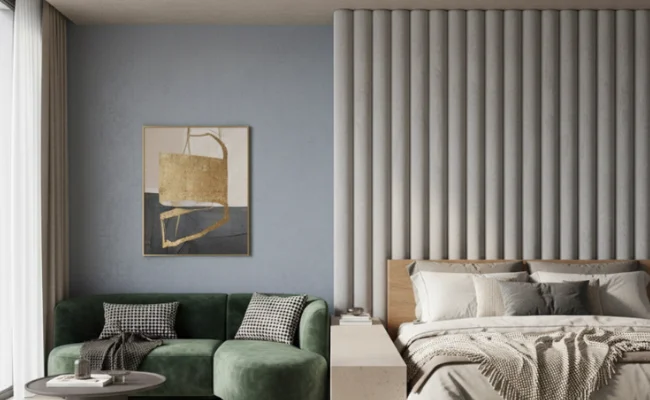
Living rooms often have the most noise. L shaped sofas help block sound flow across the room. Ottomans and cushioned seating absorb sound while adding comfort.
Heavy curtains reduce outside noise and soften indoor sound. Plush rugs help control echo from tiled floors.
TV units and bookshelves filled with objects help scatter sound instead of reflecting it directly.
Bedroom
Bedrooms should feel quiet and restful. A padded headboard paired with a wood double bed helps absorb sound near the sleeping area while adding warmth to the space. Layered bedding further reduces sharp noises inside the room, creating a more peaceful and comfortable environment.
Upholstered benches and fabric seating help soften the space. Sliding wardrobes with soft close systems reduce sudden loud sounds during daily use.
Study or Home Office
Acoustic partitions and panel dividers help separate work zones. Foldable fabric screens are useful in small homes.
Compact upholstered office chairs reduce noise compared to plastic or metal ones. Soft furnishings like cushions and curtains improve sound comfort during long calls.
Kids Room
Children naturally create sound. Bunk beds with wooden frames help break sound flow. Soft play mats reduce impact noise.
Fabric storage bins and padded furniture absorb sound and also make the room safer for kids.
Practical Ways to Make Homes Quieter on Any Budget
Choose furniture made with fabric, foam, wood, cane, and natural textures. These materials handle sound better than glass or metal.
Avoid making rooms fully minimal with only hard surfaces. Such spaces look clean but sound loud.
Layer soft furnishings slowly. Add cushions, throws, rugs, and curtains over time.
Use modular shelves and partitions to create sound zones inside open layouts.
In small apartments, place wardrobes along shared walls to block neighbour noise. Bookshelves also help with insulation. Thick rugs in noisy areas like work zones make a big difference.
Final Thoughts
Acoustic friendly furniture quietly improves daily life. It helps people focus better, feel calmer, and work comfortably from home.
Without changing walls or ceilings, furniture choices can reduce noise and improve sound balance. A peaceful home is not about silence. It is about creating spaces where sound feels controlled and comfortable.
As work from home continues, designing homes that support quiet living is becoming a real necessity rather than a luxury.