If you live on the top floor of a building in India, you don’t need a thermometer to tell you how hot it gets. By April itself, your house starts feeling like an oven. By May and June, afternoons are unbearable, nights remain warm, and fans seem to push hot air instead of cooling you down.
As a home improvement expert who has worked with top-floor homes across Delhi, Mumbai, Pune, Hyderabad, Jaipur, and Chennai, I can say this with confidence: top-floor heat is one of the most common and most frustrating problems in Indian homes—but it is also one of the most solvable.
The heat mainly comes from the roof absorbing sunlight all day, and then slowly releasing it inside your home. The good news? You don’t need to break tiles or do major renovations to fix this.
Let’s break down why top-floor houses get so hot and then explore practical, budget-friendly solutions that actually work in Indian conditions.
Why Top Floor Houses Are Hotter in India
Understanding the cause helps you choose the right solution.
- Direct Sun Exposure on the Roof
Concrete roofs absorb intense heat during Indian summers, especially between 11 am and 4 pm.
- Poor Roof Insulation
Most Indian buildings lack proper thermal insulation between the roof slab and the ceiling.
- Heat Trapped Inside Rooms
Hot air rises and stays trapped in top-floor rooms, especially with low ceilings.
- Limited Cross Ventilation
Many flats rely on one-side ventilation, reducing heat escape.
- Dark Roof and Wall Colors
Dark surfaces absorb more heat.
Start with the Roof: The Biggest Heat Source
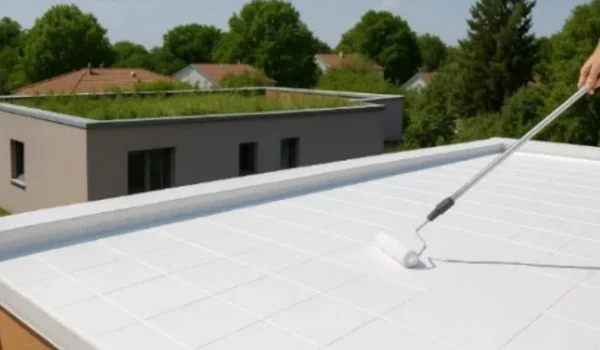
- Apply White or Reflective Roof Coating (Highly Recommended)
This is one of the most effective and affordable solutions.
Why it works:
- Reflects sunlight instead of absorbing it
- Reduces roof temperature by 5–10°C
- Improves indoor comfort significantly
Best part:
- No structural changes
- Easy application
- Long-lasting
This single step alone can make a noticeable difference.
- Use Traditional Lime Wash (Chuna)
This is an old Indian technique that still works.
Benefits:
- Reflects sunlight
- Low cost
- Eco-friendly
It needs reapplication every year, but it’s a good budget option.
- Create a Temporary Terrace Shade
If you have access to the terrace:
- Bamboo mats
- Shade nets
- Green netting
These create a protective layer between sunlight and the slab.
Insulate from Inside: Reduce Heat Transfer
- False Ceiling with Heat-Resistant Panels
If budget allows, this is a game-changer.
Benefits:
- Creates an air gap
- Reduces heat radiation
- Improves aesthetics
Materials like gypsum or thermocol panels help significantly.
- Use Thermal Insulating Sheets
These can be installed under the ceiling or inside cupboards near hot walls.
Improve Ventilation: Let Heat Escape
- Maximize Cross Ventilation
Open windows early morning and late evening to flush out trapped heat.
- Install Exhaust Fans in Hot Rooms
Exhaust fans are not just for kitchens and bathrooms.
Installing one in a top-floor room helps remove hot air quickly.
Control Heat from Windows
- Use Heat-Blocking Curtains or Blinds
Windows act like heat entry points.
Choose:
- Light-colored curtains
- Thermal or blackout curtains
- Bamboo blinds
- Use Reflective Window Films
These reduce heat while allowing light inside.
Reduce Heat Stored Inside the House
- Switch to LED Lighting
Incandescent bulbs generate heat.
LEDs:
- Produce less heat
- Consume less electricity
- Reduce Use of Heat-Generating Appliances During Day
Ovens, irons, and heavy electronics add to indoor heat.
Use Indoor Plants Strategically
- Indoor Plants That Cool the Air
Plants release moisture and improve air quality.
Good options:
- Areca palm
- Snake plant
- Money plant
Place them near windows or corners.
Use Traditional Cooling Tricks That Still Work
- Earthen Pots and Matka Water
Earthen pots naturally cool water and air nearby.
- Wet Curtains or Khus Mats (Desert Technique)
Especially effective in dry regions like Rajasthan and Delhi NCR.
Reduce Heat Absorption from Walls
- Light-Colored Paint for External Walls
Light colors reflect heat better than dark ones.
- External Shade Using Fabric or Bamboo
Temporary shades over sun-facing walls help a lot.
Floor-Level Solutions
- Use Cotton Rugs Instead of Thick Carpets
Heavy carpets trap heat.
Night Cooling Strategy (Very Important)
- Night Ventilation Routine
Open all windows at night to allow heat to escape.
Close them early morning to trap cooler air.
Cost-Effective Cooling Checklist
If you want quick relief without spending much:
- Roof coating
- Heat-blocking curtains
- Exhaust fan
- Improved ventilation
These four steps alone can reduce discomfort significantly.
What Not to Do
Avoid:
- Dark roof paints
- Blocking ventilation
- Overusing AC without insulation
These increase heat and electricity bills.
When Air Conditioners Are Not Enough
ACs cool air, but if your house is constantly absorbing heat, they’ll struggle.
Fix the heat source first—then ACs work efficiently.
My Personal Advice as a Home Improvement Expert
Top-floor heat is not a curse—it’s a design problem with multiple simple solutions. In Indian homes, combining roof treatment, ventilation, shading, and smart usage habits works better than relying on one expensive solution.
Start small. Observe results. Then upgrade step by step.
Final Thoughts
Reducing heat in top-floor houses is about working with nature, not fighting it. Reflect heat, allow air movement, block direct sun, and reduce indoor heat sources.
With the right mix of traditional wisdom and modern techniques, your top-floor home can be comfortable even during peak Indian summers.