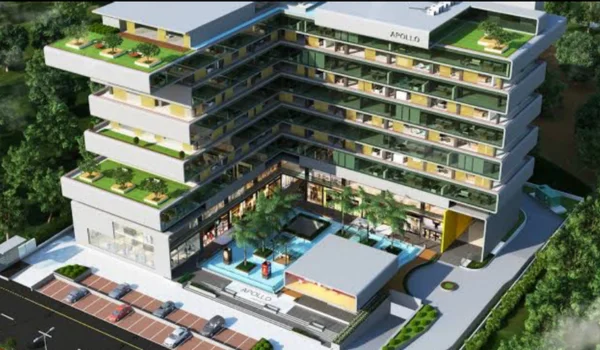
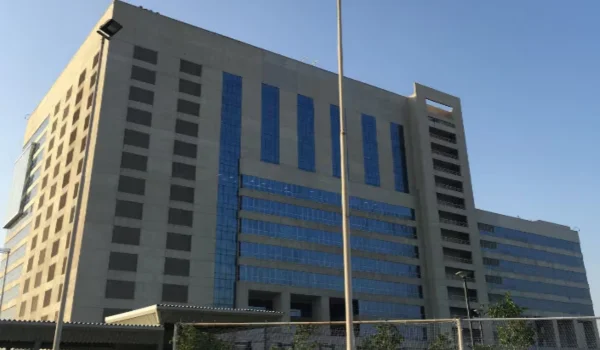
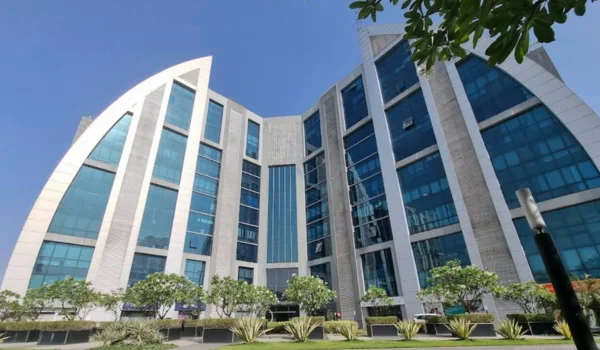
Pinnacle Business Park is a class-A commercial office complex located in the Prahlad Nagar area of Ahmedabad (Corporate Road, Azad Society vicinity). It is developed by Goyal & Co. (in partnership with Goyal Group / Hariyana group in some descriptions) and designed with modern amenities, contemporary architecture (glass façade, landscaped open areas, Green roof / terraces) to cater to businesses needing premium office space. The building houses multiple floors, offices ranging from small cabins to large workstations, and is a popular choice among firms / startups / service businesses for its infrastructure, reputation and connectivity.
Key Facts & Contact Info
| Field | Details |
| Address | Corporate Road, Prahlad Nagar, Ahmedabad, Gujarat 380015, India (Azad Society / Jivraj Park / Anand Nagar / near Vikram Nagar) |
| Website / Developer Info | Mentioned in “BusinessParkZone.com” as developed by Goyal & Co., Hariyana Group. |
| Contact Numbers | Not always centrally published; rent-listing agents provide contact for specific offices; property portal “GoodWorks” lists +91-8088707700 for managed office enquiries. |
| For managed office spaces: [email protected] (GoodWorks) for Pinnacle Business Park listings. | |
| Operating status | Ready to move / operational; multiple offices already rented; several listings show “ready-to-move” status. |
Facilities & Amenities
From architecture/design descriptions, listings and agents:
| Facility / Feature | Details / What is provided |
| Office space sizes | Variants: small cabins (≈ 1000 sq.ft), mid-sized floors (≈ 2,000-3,000+ sq.ft), large workstations, multiple cabins + conference rooms. |
| Building design & Green features | Glass façades, stacked system with terraces/open spaces/green roofs; landscaped open gardens, water bodies or mists in design to help microclimate (evaporative cooling) effects. |
| Power backup | Provided / advertised in multiple listings. |
| Lift / Elevators | Passenger lifts + service lifts; high-speed lifts in design. |
| Parking | Reserved / covered parking for tenants; some open & visitor parking; listings mention “free parking”, “visitor parking”, “3 covered parking etc.” |
| Security / CCTV / Access control | 24×7 security, CCTV surveillance features. |
| Washrooms / Pantry / Cafeteria / Food Courts | Pantries (wet / dry), cafeterias / food courts in or close by; multiple washrooms; separate male/female. |
| Common area & maintenance | Well-maintained common areas, gardens, cleaning, lighting etc. Several reviews praise maintenance. |
Google Maps Location
Connectivity & Timing
| Feature | Details |
| Nearest Railway / Local Station | Vikram Nagar railway station approx. 1.62 km away |
| Bus / Public Transport | Multiple bus routes serve Prahlad Nagar / Corporate Road; accessible by local buses; auto / taxi connectivity is good. Walking or short drive from nearby stops. |
| Metro | As of listings, no direct metro station extremely close; some metro lines will connect nearby – but walk/last-mile needed. |
| Operating / Typical Office Hours | Many businesses report office hours roughly 9:00 AM to 6:00 or 10:00 AM to 7:00 PM depending on business; listing “Yappe.in” gives hours for the park as 10:00 AM-07:00 PM for general complex/visitor hours. |
| Off / Closed Days | Sunday often off for many smaller offices/shopfronts; common public holidays apply. |
Pros & Cons (from reviews and feedback)
Pros
- Good location: Prahlad Nagar / Corporate Road is an upscale commercial zone in Ahmedabad, well-connected, close to amenities (restaurants, hotels, banks etc.) and considered safer and prestigious.
- Modern infrastructure & building design: Users frequently mention that the architecture, façade, lifts, interior design etc are well done; well-lit, clean and premium quality.
- Amenities provided: Power backup, parking, food court / cafeteria, pantry, multiple washrooms, visitor parking are strong positives.
- Good reviews from tenants / visitors: Average rating ~4.4 / 5 from multiple sources (Zaubee, BusinessParkZone, Yappe.in) suggesting general satisfaction.
Cons / Challenges
- Parking constraints for visitors: Although parking is available, several reviews mention visitor parking as a pain point, especially during peak hours.
- Security staff behaviour: Some feedback indicates that security guards or parking staff could be more polite, or improve on visitor guidance / manners.
- Navigation / complex size: Because it’s a large park, visitor entry / wayfinding inside the complex can be confusing; signboards or directional aids might be insufficient.
- Water / utilities issues: A few reviews mention occasional issues with water supply / quality / pressure; could be intermittent.
- Traffic congestion: Prahlad Nagar area sees heavy traffic during office hours; commuting delays, ingress/egress from the property can be slow during peak traffic.