Managing money has become easier today, and one big reason is the demat account. A demat account is a digital place where your shares and other investments are stored safely. Earlier, people kept physical share certificates, but these papers could get damaged or lost. A demat account keeps everything online, so you can check, buy, or sell your investments easily.
If you want to start investing, the first step is to open free demat account online. But should you open it online or offline? Many new investors get confused because both methods look useful.
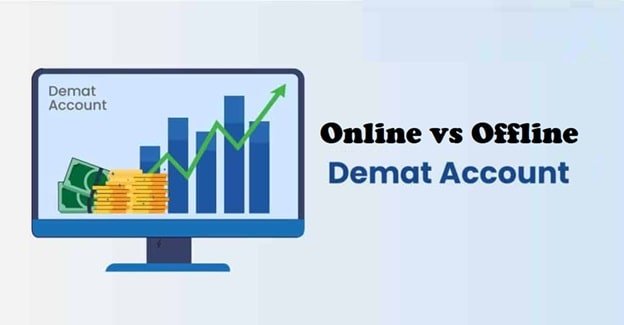
What Is a Demat Account
A demat account, also called a dematerialised account, is used to store your shares in electronic form. When you buy shares in the stock market, those shares go directly into your demat account. When you sell them, the shares move out.
A demat account works like a digital locker for your investments. It helps you avoid physical paperwork and reduces the chance of losing important documents.
You need three things to start investing in shares:
- A demat account for storing your shares.
- A trading account for buying and selling shares.
- The bank account for money transfers.
Why Choosing the Right Opening Method Matters?
The way you open your demat account can affect your experience as an investor. New investors should choose a method that is easy, stress-free, and fits their comfort level. The two ways to open a demat account are:
- Online demat account opening
- Offline demat account opening
Online Demat Account Opening
This method allows you to open your demat account using your phone or computer. It is fast, easy, and does not require visiting any office.
1. Very Convenient
You can start the process anytime from your home. You just need an internet connection. You fill out a form online and upload your documents, such as your Aadhaar card, PAN card, and a photo.
2. Quick Processing
Online applications are processed much faster. In many cases, the account becomes active in a few hours. This helps new investors begin their journey without waiting for days.
3. Lower Costs
Online services usually have fewer fees. Many platforms offer discounts on account opening charges. This makes online opening a budget-friendly option for new investors.
4. Easy Tools and Learning Support
Online platforms provide videos, guides, calculators, and real-time updates. These tools help beginners learn how the stock market works and make better decisions.
5. Simple Tracking
You can check your investments anytime. You can also get alerts on price changes, portfolio updates, and more. This helps new investors stay informed.
6. Access Anytime
Online platforms work 24 hours a day. You can log in early in the morning or late at night to check your investments whenever you want.
Offline Demat Account Opening
In this method, you visit a physical office or meet a representative who helps you complete the application.
1. Face-to-Face Interaction
Some beginners want personal help. Meeting a staff member can make them feel confident. They can ask questions and get clear explanations.
2. Step-by-Step Guidance
If someone is not comfortable with technology, an offline opening is very helpful. The staff assists with forms, documents, and signatures.
3. Detailed Conversations
You can discuss your doubts in detail. You can also understand charges, features, and investment choices through human support.
4. Helpful for Complex Cases
If you have joint accounts, multiple documents, or special requirements, offline help can make the process smoother.
5. Physical Paper
Some people prefer having printed copies of agreements. Offline opening provides physical paperwork that feels safe and trustworthy.
6. Limited Office Hours
This is one drawback. You can only visit the office during working hours, which may be difficult if you have a busy schedule.
Comparison of Online and Offline Demat Account Opening
Here is a simple and clear comparison.
| Feature | Online Opening | Offline Opening |
| Convenience | Very high. Done from home. | Medium. Only during office hours. |
| Speed | Fast processing | Slow processing |
| Cost | Usually lower | Usually higher |
| Support | Digital support | Personal support |
| Accessibility | Works anytime | Restricted to working hours |
| Documentation | Digital documents | Physical papers |
| Learning help | Many online tools | Human guidance |
Some investors choose online opening because it is simple. Some choose offline because they want reassurance. Both methods lead to the same result, which is a working demat account that stores your investments safely.
Even platforms like Findoc encourage users to pick the method that suits their comfort and investment style.
Conclusion
Both online and offline methods are good for opening a demat account, but the best choice depends on the type of investor you are. Online opening is fast, simple, and cost-effective. Offline opening offers personal help and detailed guidance.
If you are a new investor, choose the method that feels easy and stress-free for you. The goal is to begin your investing journey with confidence. Once you have your demat account ready, you can start exploring the world of investments and learn step by step. No matter which method you choose, what truly matters is that you take the first step and stay consistent in learning about finance.
Your investment journey becomes smoother when you pick the method that matches your comfort level.