Brands can use outdoor events as a direct way to connect with consumers in an ever-changing environment; therefore, visibility and first impressions are critical. Since outdoor events often have multiple competing brands and displays crowded together, standing out at these locations will require more than just being there. It will require great design and effective presentation on the part of the brand or display. Custom promotional tents are an excellent example of how to use a custom-designed, well-made tote and structure as a powerful branding tool and a way to connect with consumers through storytelling, message delivery, and visual identity. A well-designed custom tent can provide shade and shelter while also serving as a large-format canvas for storytelling, message delivery, and visual identity.
Five Ways to Maximize Brand Exposure with Custom Tents
1. Create a Strong Visual Entry Point
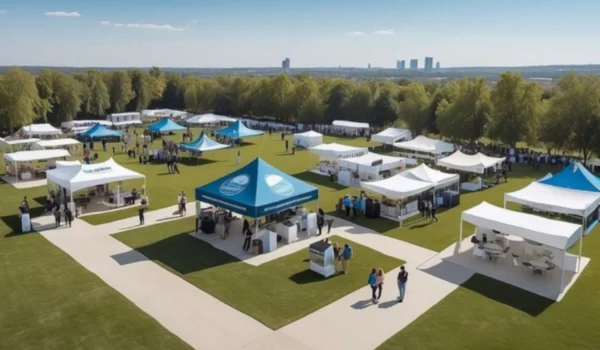
Various large structures, such as inflatable arches for events or trade show booths, are terrific ways to provide visitors with a unique, easy-to-recognize entrance to an event. These large structures also serve as conspicuous landmarks during busy events, guiding guests to the tent of interest and conveying a strong message about the distinct brand of the tent’s organization.
The use of a clearly defined entryway enhances the tent’s greeting/arrival experience by creating an “arrival/first impression” for visiting guests. This experience has a significant positive impact on booth traffic and encourages guests to visit it.
When an inflatable arch is coordinated with the tent’s graphics, the organization’s branding remains consistent, creating a visually cohesive experience for visitors to the booth in competitive environments.
2. Use High-Impact Graphics for Maximum Visibility
How effectively the custom tent functions as a mobile advertising display is primarily determined by its visual design. If multiple large, clear, high-resolution graphic images are printed on the tent canopies and sidewalls, the branding will be visible to people viewing it from different angles or distances.
The use of bold colors and clearly readable fonts combined with brief messaging will allow fast consumers to easily identify corporate branding. In a fast-paced market, where there is little time for consumers to focus their attention, using powerful visuals can convert interest in a matter of seconds. Using consistent branding across all surfaces will help the customer easily identify it after the event has passed.
3. Position the Tent Strategically Within the Event Space
To maximize exposure, the location is key to generating foot traffic, and visibility is achieved by strategically placing the tent in high-foot-traffic areas. Examples include entrances, intersections, and nearby popular attractions.
When strategically positioned, the tent will be part of the natural flow of pedestrian traffic throughout the event. This further promotes spontaneous engagement and higher levels of interaction.
Having multiple points of entry into the tent will also increase exposure. By placing the tent correctly, it will act as a focal point and will draw attention from various points throughout the event.
4. Design Interactive Spaces to Encourage Engagement
Visitors are attracted to your booth visually; however, interacting with you keeps them there. Adding certain interactive components like product demonstration stations, sampling stations, and digital displays will create an experiential environment for attendees in the tent.
By providing an experience where visitors can interact with the products in your booth, you will encourage them to spend more time in your area and give you more opportunities to have a meaningful conversation about your brand.
By using engagement-driven design to create a tent that demonstrates product or service offerings, you create not only an avenue for displaying items but also an environment conducive to developing relationships and generating interest.
5. Extend Brand Presence Beyond the Event
A branded tent benefits your organization long after an event is over. Obtaining visitor contact details, distributing electronic information, and continuing your communications allow your brand to be experienced beyond the physical location.
Continued engagement can be achieved through follow-up strategies, such as content sharing or personalized communication, to strengthen the initial customer encounter and reinforce brand recall.
When a business combines on-site experiences with follow-up communication, it can gain value from its investment and maintain its brand’s exposure over time.
End Point
Custom tents are a highly effective way to promote a brand by serving as a mobile billboard at outdoor events. Using visually impactful entry points, compelling graphics, tactically placed tents and tent products, engaging consumers interactively, and establishing ongoing interaction through tent-provided opportunities can turn a simple tent setup into a dynamic marketing tool. When done properly, custom tents not only draw the attention of event attendees; they leave a lasting impression that continues to generate brand exposure long after the event.